Youth Baseball Practice Plans: A Comprehensive Guide
Today’s date is 04/09/2026 02:15:22. This guide focuses on intermediate players, offering a 90-minute session to correct existing hitting mechanics.
Understanding Age-Specific Needs
Tailoring practice to developmental stages is crucial for young baseball players. Younger athletes (ages 7-9) benefit from shorter, more frequent sessions emphasizing fundamental motor skills and fun. Focus should be on introducing basic throwing, catching, and hitting concepts, utilizing games and positive reinforcement.
As players progress (ages 10-12), practices can become longer and more structured, introducing more complex drills and strategic concepts. This age group is receptive to learning proper mechanics and understanding game situations. Intermediate players, like those targeted in the 90-minute plan, require focused attention on refining technique and addressing bad habits.
Older youth (ages 13-14) can handle advanced drills and a greater emphasis on physical conditioning. Understanding individual player needs within each age group is paramount for maximizing development and preventing injuries.
Practice Plan Duration & Frequency
Optimal practice duration varies by age and skill level. For younger players (7-9), 60-75 minute sessions, 2-3 times per week, are generally sufficient. These sessions should prioritize skill development and enjoyment. As players mature (10-12), practice length can increase to 90-120 minutes, maintaining a frequency of 2-3 times weekly.
The intermediate 90-minute plan, designed for habit correction, represents a good balance for this age group. Older youth (13-14) can handle longer, more intense practices (up to 2 hours) 3-4 times per week, incorporating strength and conditioning.
Consistency is key; regular, well-planned practices are more effective than infrequent, lengthy ones. Allow for rest and recovery to prevent burnout and injuries. Adjust frequency based on game schedules and player fatigue.
Essential Equipment for Youth Baseball Practice
A well-equipped practice ensures safety and effective skill development. Core necessities include baseballs (multiple types for different drills – soft toss, regulation), batting helmets, and batting gloves. A batting cage or net is crucial for safe hitting practice, alongside batting tees for swing mechanics work.
Fielding requires gloves for each player, and a supply of baseballs. Cones or markers are helpful for agility drills and base running practice. First aid kit is non-negotiable for minor injuries.
For advanced drills, consider a pitching machine (age-appropriate speed), weighted balls for arm strengthening, and an agility ladder. Coaches should have a whistle, and a whiteboard or notepad for planning and feedback. Proper footwear (cleats) is essential for all players.

Warm-Up & Conditioning (15-20 Minutes)
Prioritize injury prevention with a dynamic warm-up. This phase prepares muscles for activity, enhancing performance and reducing the risk of strains.
Dynamic Stretching Exercises
Begin with arm circles – forward and backward – to loosen shoulder muscles, preparing them for throwing. Next, incorporate leg swings, both front-to-back and side-to-side, to improve hip mobility and hamstring flexibility. Torso twists are crucial for core engagement and rotational power, vital for hitting.
Include walking lunges with a twist, enhancing lower body strength and core stability simultaneously. High knees and butt kicks are excellent for warming up the leg muscles and improving coordination. Don’t forget inchworms, which combine stretching and core work, promoting overall body awareness.
These dynamic stretches should be performed with controlled movements, focusing on range of motion rather than holding a stretch for an extended period. Each exercise should be completed for approximately 20-30 seconds, ensuring a thorough warm-up before more strenuous activities begin. Remember to emphasize proper form to maximize benefits and minimize injury risk.
Light Cardio & Running Drills
Start with a light jog around the perimeter of the field, gradually increasing the pace to elevate heart rate and warm up the muscles. Incorporate short sprints – 20-30 yards – to mimic the bursts of speed required during gameplay. Shuttle runs, moving back and forth between designated points, enhance agility and quickness.
Introduce high-knee runs and butt-kick runs to further activate leg muscles and improve coordination. Carioca drills, weaving side-to-side, promote lateral movement and agility. Line touches, sprinting to touch a line and returning, build speed and change-of-direction skills.
These drills should be performed for short durations with adequate rest periods in between. Focus on proper running form – maintaining a good posture and driving with the arms. The goal is to prepare the body for more intense activity, not to exhaust the players. A 5-10 minute cardio session is sufficient.
Arm Care & Shoulder Conditioning
Prioritize arm health with a dynamic warm-up focusing on shoulder mobility. Begin with arm circles – forward and backward – gradually increasing the range of motion. Implement sleeve stretches, gently rotating the arm internally and externally to improve flexibility. Cross-body arm stretches further enhance shoulder range.
Introduce resistance band exercises for rotator cuff strengthening. External rotations and internal rotations with light resistance build stability and prevent injuries. Scapular retractions and protractions engage the muscles surrounding the shoulder blade, improving posture and control.
Light towel slides, performed against a wall, promote proper scapular movement. These exercises should be performed with controlled movements and proper form. Avoid overexertion and listen to the body. A 5-7 minute arm care routine is crucial before throwing.
Hitting Drills (30-40 Minutes)
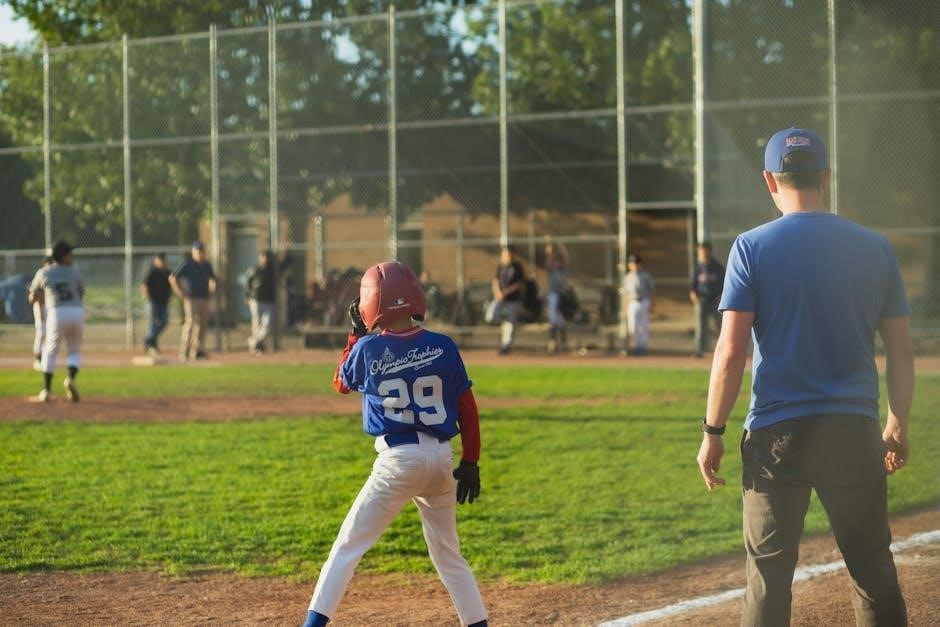
Focus on adjusting bad habits! Players pair up for soft toss, kneeling 10 feet from a net with 5-10 balls nearby, improving technique.
Soft Toss Hitting Technique
Soft toss is a foundational drill, perfect for reinforcing proper hitting mechanics and timing. The drill involves a partner kneeling five to ten feet to the side or slightly in front of the hitter, gently tossing balls underhand. The hitter should maintain a balanced athletic stance, focusing on a short, compact swing path.
Emphasize keeping the hands inside the ball and driving through contact. Coaches should observe for common errors like casting, dropping the hands, or an overly long swing. The proximity of the toss allows hitters to concentrate on making solid contact without worrying about velocity.
Players should work through a series of ten to fifteen soft tosses, concentrating on each swing. This drill is excellent for building confidence and muscle memory, particularly for younger or less experienced players. It’s a great starting point before progressing to more challenging drills like front toss or live batting practice. Remember to utilize a net, screen, or fence for safety.
Tee Work for Swing Mechanics
Tee work is invaluable for isolating and correcting specific swing flaws. By removing the variable of a pitched ball, hitters can focus entirely on their mechanics. Start with the tee positioned at a comfortable height, allowing for a natural swing plane. Players should consistently work on maintaining proper posture, hand position, and weight transfer.
Coaches should emphasize a controlled, repeatable swing, focusing on driving through the ball with extension. Encourage hitters to visualize hitting the ball to different parts of the field. Varying the tee position – inside, middle, and outside – helps develop the ability to adjust to different pitch locations.
This drill is ideal for building a solid foundation and reinforcing fundamental principles. It’s particularly beneficial for addressing issues like looping swings, casting, or inconsistent contact. Consistent tee work builds muscle memory and promotes a more efficient and powerful swing.
Front Toss Drills for Timing
Front toss bridges the gap between static tee work and live batting practice, focusing on developing timing and hand-eye coordination. The coach gently tosses the ball underhand from a position slightly in front of the hitter, aiming for a consistent and repeatable delivery. Players should be positioned about ten feet from a net or screen, maintaining a balanced hitting stance.
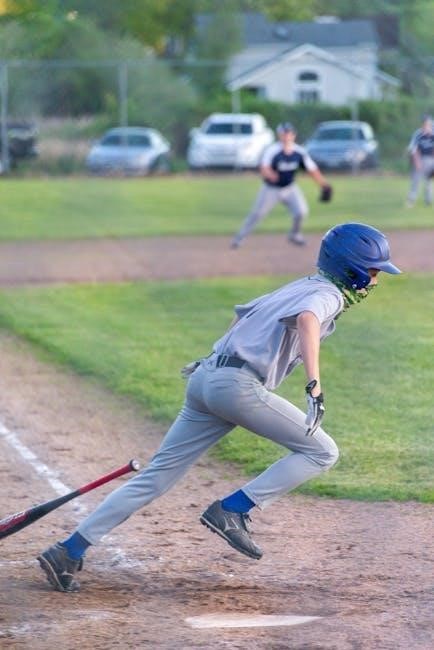
This drill allows hitters to practice tracking the ball and adjusting their timing accordingly. Coaches can vary the toss location – inside, outside, high, and low – to challenge the hitter’s ability to make contact consistently. Emphasize a quick hand release and a smooth, controlled swing.
Front toss is excellent for refining swing paths and improving the hitter’s ability to recognize different pitch speeds. It’s a crucial step in preparing for live batting practice and game situations.
Live Batting Practice & Situational Hitting
Live batting practice introduces the element of velocity and movement, simulating a game-like experience. A coach or pitching machine delivers pitches, allowing hitters to work on timing, pitch recognition, and making adjustments on the fly. Start with slower speeds and gradually increase as hitters demonstrate consistent contact.
Situational hitting drills build upon live batting practice by adding game context. For example, practice hitting with a runner on first and no outs, or with a runner on third and less than two outs. This helps players understand how to adjust their approach based on the game situation.
Focus on hitting to all fields and driving the ball with authority. Encourage hitters to visualize success and maintain a positive mental attitude throughout the drill. This phase is vital for translating practice skills into game performance.
Fielding Drills (30-40 Minutes)
This segment concentrates on refining ground ball technique, fly ball tracking, and proper positioning, building a solid defensive foundation for young players.
Ground Ball Technique & Footwork
Developing solid ground ball skills is paramount for any young infielder. Begin with players in the fielding position, emphasizing a wide, athletic stance – knees bent, back straight, and glove out front. The initial focus should be on approaching the ball aggressively, charging forward with short, choppy steps to gain control.
Footwork is crucial. Players should practice “funneling” the ball into their glove, creating a soft target. Drills should incorporate side-to-side movements, simulating balls hit to the forehand and backhand. Emphasize fielding the ball out in front of the body, avoiding reaching across the body which can lead to errors.
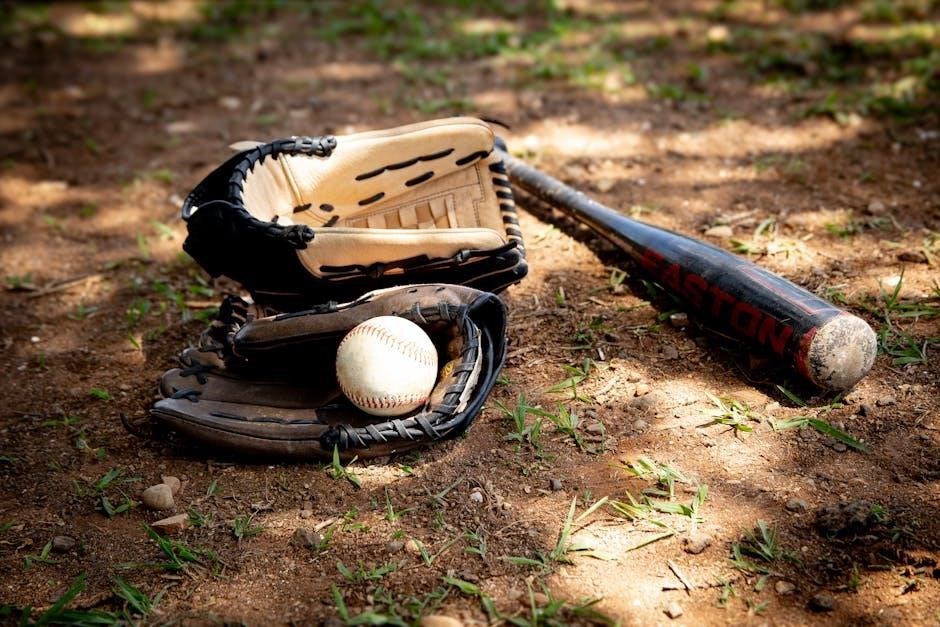
Coaches should provide consistent feedback on hand positioning, glove angle, and body alignment. Progress from slow rollers to harder-hit balls, gradually increasing the difficulty. Repetition is key to building muscle memory and confidence. Encourage players to communicate and work together during these drills, fostering teamwork and a positive learning environment.
Fly Ball Tracking & Glove Work
Mastering fly ball skills requires dedicated practice focusing on tracking and proper glove presentation. Start with coaches softly tossing fly balls to players, emphasizing the importance of getting under the ball quickly. Players should use a “crow hop” technique to gain momentum and position themselves for the catch.
Visual tracking is critical; players must maintain focus on the ball from the moment it’s hit until it’s secured in their glove. Glove work should emphasize soft hands and a secure pocket. Drills should incorporate varying ball heights and angles, challenging players’ ability to adjust.
Communication is vital – players should call for the ball loudly and clearly. Coaches should provide feedback on positioning, footwork, and glove technique. Gradually increase the difficulty by using a fungo bat to hit fly balls with more distance and speed, building confidence and skill.
Infield/Outfield Positioning Drills
Effective positioning is crucial for defensive success. Infield drills should begin with players understanding the basic positions for different hitting scenarios – ground balls, pop-ups, and line drives. Coaches should simulate game-like situations, calling out the hitter and directing players to their appropriate spots.
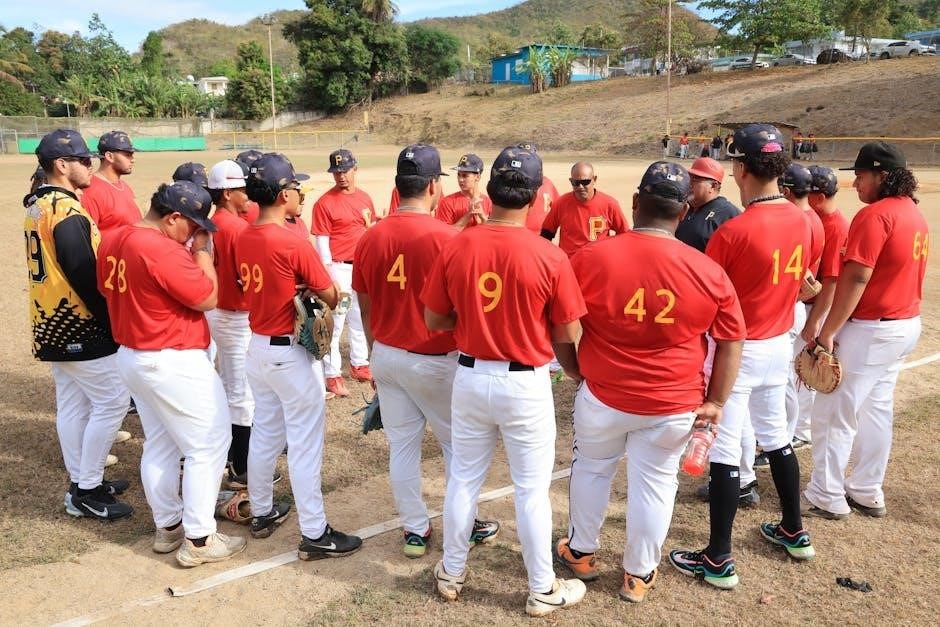
Outfield positioning drills focus on reading the batter and anticipating where the ball will be hit. Players learn to shade towards left or right field based on the hitter’s tendencies. Drills should incorporate communication between outfielders, ensuring they cover appropriate territory.
Emphasis should be placed on quick reactions and efficient movement to the ball. Coaches should provide feedback on positioning adjustments and encourage players to anticipate the play. Regular repetition builds muscle memory and improves defensive instincts, leading to more successful plays.
Double Play Practice & Rundowns
Mastering the double play is a game-changer for infield defense. Drills should start with the basic 4-6-3 double play, focusing on smooth transfers, accurate throws, and quick footwork. Progress to more complex scenarios, including double plays from bunt attempts and slow ground balls.
Rundowns require communication, agility, and quick thinking. Practice begins with a simple rundown between two infielders, emphasizing throwing accuracy and forcing the runner into a difficult position. Introduce variations with more players involved and different runner starting points.
Coaches should stress the importance of maintaining pressure on the runner and avoiding errors. Drills should be fast-paced and game-like, simulating the intensity of a real rundown situation. Consistent practice builds confidence and improves execution.
Throwing & Pitching (20-30 Minutes)
Focus on proper mechanics and building arm strength through long toss. Age-appropriate pitching drills should prioritize control and technique, not velocity.
Proper Throwing Mechanics
Establishing sound throwing mechanics is paramount for youth baseball players, minimizing injury risk and maximizing throwing efficiency. Begin with a balanced stance, feet shoulder-width apart, and a comfortable grip on the baseball. The throwing motion should initiate from the legs, transferring weight from the back foot to the front foot as the arm comes through.
Emphasize a high elbow position throughout the throwing arc, creating a “W” shape with the arm. This promotes proper shoulder rotation and generates increased velocity. Players should focus on a smooth, overhand throwing motion, avoiding sidearm or underhand deliveries which can strain the elbow. Follow-through is crucial; the arm should continue its motion towards the target, finishing across the body.
Coaches should consistently reinforce these fundamentals, providing individualized feedback to correct any mechanical flaws. Drills focusing on footwork, arm action, and follow-through will help ingrain proper technique. Remember, consistency and repetition are key to developing a reliable and effective throwing motion;
Long Toss for Arm Strength
Long toss is a vital component of any youth baseball throwing program, progressively building arm strength and endurance. Begin with shorter distances, around 50-60 feet, focusing on proper mechanics and a smooth, controlled throwing motion. Gradually increase the distance with each throw, challenging players to maintain their form as they extend their range.
Emphasize a consistent arc on the throw, aiming for a high trajectory to allow for a softer catch. Players should communicate with their partners, ensuring safe and accurate throws. Monitor players for signs of fatigue or discomfort, and adjust the distance accordingly. It’s crucial to prioritize proper technique over maximum distance, especially with younger players.
Long toss isn’t about velocity initially; it’s about building a foundation of strength and endurance. Incorporate rest periods between sets to prevent overexertion. This drill prepares the arm for the demands of pitching and competitive throwing, reducing the risk of injury.
Pitching Mechanics & Control Drills (Age Appropriate)
Introducing pitching mechanics requires a cautious, age-appropriate approach. Younger players should focus on fundamental movements – balance, stride, and arm action – before attempting complex deliveries. Drills should emphasize proper form and minimize stress on developing arms. Start with flat-ground work, concentrating on a smooth, repeatable motion.
Control drills are paramount. Utilize targets – cones, buckets, or a designated catcher – to encourage accuracy. Implement a “strike zone” drill, rewarding players for hitting the target consistently. Gradually introduce a pitching mound, ensuring players maintain proper mechanics.
Limit pitch counts strictly, adhering to age-based guidelines to prevent overuse injuries. Prioritize technique over velocity, and always emphasize the importance of warming up and cooling down. Regular feedback and individualized instruction are crucial for developing sound pitching habits.
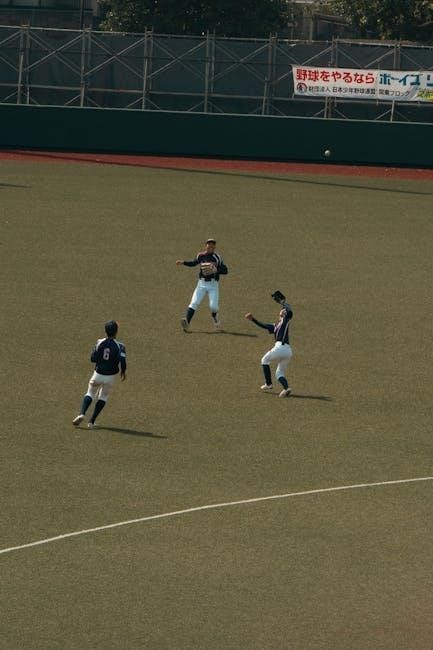
Baserunning & Agility (15-20 Minutes)
This segment focuses on leading off, stealing bases, proper base rounding techniques, and safe sliding practices, enhancing player speed and awareness.
Lead Offs & Stealing Bases
Developing proficient baserunners requires dedicated practice. Begin with proper lead-off techniques, emphasizing a controlled approach and quick reaction to the pitcher’s movements. Players should practice taking a lead, understanding the importance of a balanced stance and minimizing movement to avoid being picked off.
Stealing bases is a crucial skill. Drills should focus on timing – getting a good jump on the pitcher – and sliding techniques. Coaches should emphasize reading the pitcher’s delivery and recognizing favorable counts. Practice different types of steals, including secondary leads and delayed steals, to add complexity.
Safety is paramount. Teach players the correct way to slide, both feet-first and head-first (age-appropriately), to avoid injuries. Incorporate agility ladder drills to improve foot speed and quickness, essential for successful base stealing. Regularly review baserunning fundamentals to reinforce proper technique and decision-making.
Rounding Bases & Sliding Techniques
Efficiently rounding bases is vital for maximizing runs. Drills should emphasize maintaining speed through the base, not to the base, utilizing a proper rounding arc. Players need to practice aggressively rounding first and second, anticipating the throw and preparing for the next base.
Sliding techniques are crucial for both safety and speed. Begin with feet-first slides, ensuring players understand how to hook the base and avoid collisions. Introduce head-first slides cautiously, only for older, more experienced players, and with proper instruction on body positioning and arm protection.
Emphasize the importance of sliding to avoid tags and to gain extra distance. Practice different slide variations, including pop-up slides, and always prioritize safety. Coaches should consistently reinforce proper technique and monitor players to ensure they are sliding correctly and minimizing risk of injury.
Agility Ladder Drills for Quickness
Agility ladder drills are fantastic for developing foot speed, coordination, and quickness – all essential for baseball success. Start with basic drills like in-and-outs, focusing on rapid footwork and maintaining a low center of gravity. Progress to more complex patterns, such as lateral shuffles and Icky Shuffle variations, to challenge players further.
Emphasize proper technique: small, quick steps, and keeping the head up. Coaches should demonstrate each drill clearly and provide constructive feedback. Incorporate drills that mimic baseball movements, like quick bursts towards first base or fielding ground balls.
Ladder drills aren’t just about speed; they improve reaction time and body control. Vary the drills regularly to prevent boredom and continually challenge the athletes. Remember to prioritize proper form over sheer speed, especially when introducing new patterns.
Cool-Down & Flexibility (5-10 Minutes)
Conclude practice with static stretches, holding each for 20-30 seconds. Review the session and set goals for improvement during the next practice.
Static Stretching Exercises
Following the active cool-down, incorporate static stretches to improve flexibility and reduce muscle soreness. Each stretch should be held for approximately 20-30 seconds, ensuring a gentle pull without causing pain. Focus on major muscle groups used during baseball activities.
Key stretches include: hamstring stretches (seated or standing), quadriceps stretches (standing, holding the foot), calf stretches (leaning against a wall), shoulder stretches (across the body or overhead), triceps stretches (reaching behind the head), and wrist stretches (extending and flexing the hand).
Encourage players to breathe deeply and relax into each stretch. Remind them that stretching is not a competition; the goal is to improve range of motion and prevent injuries. Proper form is crucial to avoid strains or pulls. Coaches should actively monitor players and provide guidance as needed, ensuring everyone is performing the stretches correctly and safely.
Review of Practice & Goals for Next Session
Conclude each practice with a brief review of the skills worked on and the progress made. Highlight individual and team accomplishments, offering positive reinforcement. This is an excellent opportunity to address any areas where players struggled and provide constructive feedback.
Specifically, discuss the effectiveness of the hitting drills, fielding techniques, and throwing mechanics practiced during the session. Ask players for their input on what felt challenging and what they learned.
Then, clearly outline the goals for the next practice. This provides a sense of direction and anticipation. For example, if today focused on soft toss hitting, the next session might build upon that with front toss drills or live batting practice. Setting clear objectives ensures focused effort and continued improvement.